

About Us
Who we are
Brandon and Bryan are your lead Academy instructors.
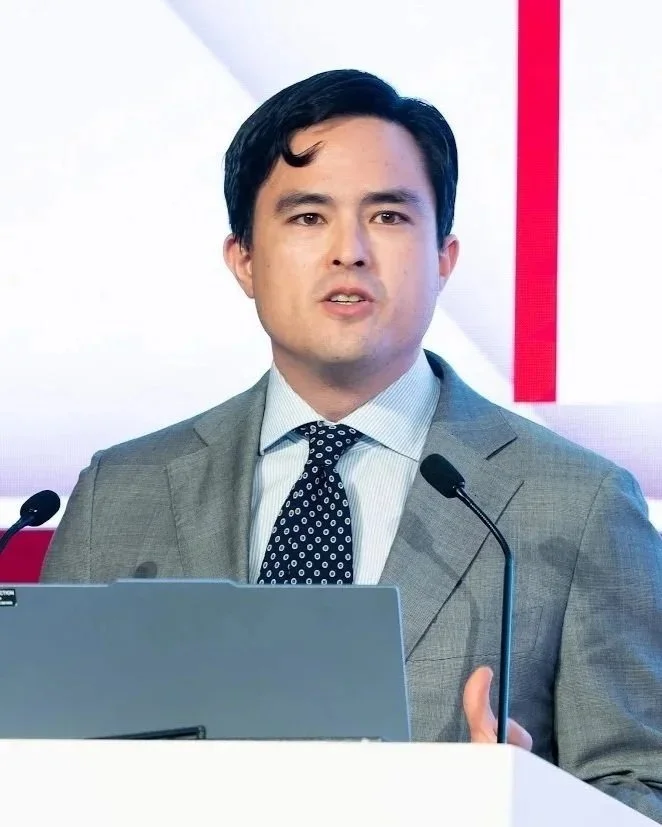
Brandon Oto, PA-C, FCCM studied philosophy, but don't hold that against him. After college, he worked in EMS, spending seven-ish years on the ambulance before heading to PA school. He completed a critical care residency at the Johns Hopkins Hospital, then spent the next 11 years in medical, surgical, neuroscience, and cardiac critical care. He's worked in large centers and small community hospitals, covered day and night shifts, taught, built QI projects, and run research studies; he's served on national committees with the SCCM and the Citizen CPR Foundation, taught for CHEST and the Society of Point-of-Care Ultrasound, and delivered lectures around the world from San Francisco to Dubai. He has particular interests in ICU liberation, mechanical ventilation, diagnostic reasoning, vascular access, and cardiac arrest.
Throughout his career, he was frustrated by the limitations of traditional educational tools, and relied on online sources to supplement his learning. He started teaching digitally in 2011 with his prehospital blog EMS Basics, presenting everything from pharmacology tutorials to stories from the fictional town of "Scenarioville." In 2017, he started blogging for critical care (Critical Concepts), and in 2019 he launched the Critical Care Scenarios podcast with Bryan, which has since published over 200 episodes of free medical education.
If Brandon joined the circus, his stage name would be "The Great Explainer." His superpower is analyzing the rules and principles inherent to a system and translating them into practical models for learners, without invoking knowledge they haven't acquired yet. He understands medicine in terms of connected concepts, not numbers and arbitrary rules, and thinks most clinicians (though not all) feel the same. He's allergic to the traditional techniques and baggage of medical education that don't truly help people learn.
Outside of work, he likes to goof around with his son and daughter, build furniture, take photos, and play with amateur radio.
Loves: self-directed learning, asking "why," making things practical, understanding the context, manipulating physiology, a nice subclavian line, restoring normality, waxing philosophic.
Hates: closed-minded and simplistic thinking, education that satisfies systems rather than learners, calcium physiology, doing things for no reason.
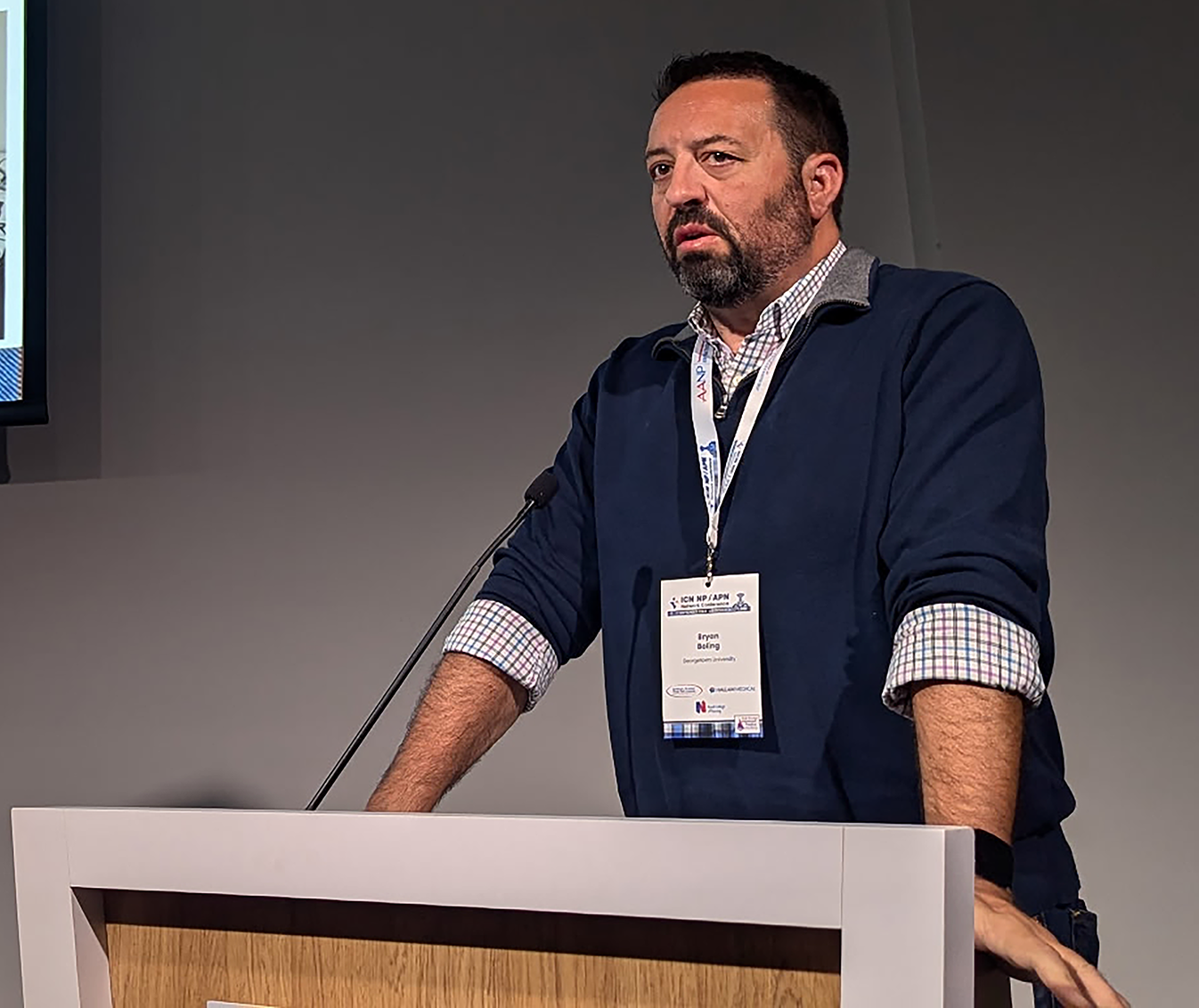
Bryan Boling, DNP, AGACNP-BC, FCCM has spent most of his career taking care of very sick people in very loud places. He's a critical care nurse practitioner specializing in surgical and neurocritical care, an assistant professor, conference speaker, author, simulation enthusiast, editor of Critical Care Notes, and one-half of the Critical Care Scenarios podcast.
Bryan likes new ideas... but not because they're new. He's an enthusiastic adopter of anything that genuinely helps patients or clinicians, whether that means ultrasound, simulation, podcasts, or the occasional practice-changing paper. But he's also happy ignoring the latest shiny object if it doesn't make anyone safer or smarter; he figures medicine has enough trends and needs a little judgment.
If Brandon is performing as "The Great Explainer," Bryan's stage name would be "The Translator." His favorite question isn't What's the answer?, but rather Why does that happen? He believes understanding how things work (and why they break) is a far better strategy than memorizing lists of facts that disappear the moment the exam is over. His goal isn't to make medicine seem simpler than it is, but to reveal the simple principles hiding underneath the complexity.
Whether he's teaching nurse practitioner students, conference audiences, or a worried patient's family, Bryan is usually trying to accomplish the same thing: replace confusion with understanding. He has an irrational amount of faith that almost anyone can learn difficult concepts if they're explained the right way. Give people a framework instead of a fact sheet, and they'll surprise you.
Outside the ICU, Bryan is fascinated by almost anything that rewards curiosity. He enjoys learning languages, traveling with his wife, tinkering with technology, exploring history and culture, and finding new rabbit holes to disappear into. He's convinced that the best teachers are lifelong students, and that medicine is a lot more enjoyable when you never stop asking "why."
Loves: physiology that actually makes sense, practical teaching, good questions, simulation, POCUS, clever mental models, bourbon, finding the one explanation that finally makes everything click.
Hates: memorizing facts without context, adopting ideas because they're fashionable, educational jargon, "because that's how we've always done it," and ICU monitors that alarm for absolutely no reason.
Frequently asked questions
-
Foundations is a comprehensive didactic curriculum covering >50 topics and targeted at new APPs (physician assistants and nurse practitioners) starting out in the ICU. Many centers aren’t equipped to offer new hires any training beyond basic clinical immersion (“go forth and figure it out”); Foundations is the missing link. By teaching conceptual frameworks and practical approaches to the core concepts underpinning critical care, it’s meant to supplement on-the-job training.
It's intended for a generalist audience and should be applicable for clinicians in every ICU, regardless of specialty or size. In terms of level, it's written for a person who has completed an NP or PA training program, but has little or no experience in critical care, or even in inpatient medicine. However, we think it would also be valuable for bedside ICU nurses, students, or allied health professionals looking for some clinical training and perspectives, and could serve as a broad review of practical ICU care for more advanced clinicians as well.
Foundations is divided into four sections, Foundations: Concepts (general principles of ICU care, workflow, and therapeutics), Foundations: Pathology (specific diseases and their diagnosis and treatment), Foundations: Procedures (bedside procedures), and Foundations: POCUS (ultrasound).
-
Yes! We address foundational critical care content, specialized topics for those in the MICU, SICU, cardiac ICU, and elsewhere, and all the way up through master-level concepts.
We aim for content that's useful for learners from a range of backgrounds, with a couple caveats:
Our content is written for an audience practicing in the United States. While much of it will apply elsewhere, some care may differ geographically.
We focus on an adult population and do not address differences in pediatric care.
Clinicians treating pediatrics or practicing outside the US can still make use of the Academy, but will need to make the necessary adjustments for their environment.
-
Yep, the full Foundations program is accredited! Check out the CME page for more details.
-
Sure. Overview of Vascular Access: Needle Tracking is visible to the public as a preview of the Foundations program, and several videos within the MICU, Procedures, and POCUS courses are accessible on their respective course pages. If you feel the need for a more comprehensive preview, shoot us an email and we’ll see about setting up a short trial.
-
Sure! Bulk discounts are available for any group of 5 or more users that enrolls together and maintains their subscriptions. Email us to inquire.
-
Yes, the website is optimized for either desktop or mobile use. The podcasts can be accessed using any podcast-catcher app (Apple Podcast, Overcast, etc).
-
Shortly after subscribing, you’ll receive three emails from Castos, our podcast provider. This will include instructions for adding each feed to your podcast app. This login is unique to you, will not work for anyone else, and will stop working if your membership ends. You will receive three Castos emails, one for each feed (Pearls, Reviews, and Videocast).
-
Reviews: Audio-only versions of the lessons, meant for easy review on the go.
Pearls: Short, stand-alone lessons on brief clinical points or general musings.
Videocast: Some users prefer to watch the lessons on their mobile devices using a podcast app rather than on the website. The videocast is simply each video lesson in its entirety (not broken up into chapters); it differs from the Reviews feed, which is audio-only.
Note that not all podcast apps support video; you’ll need to check on yours. (The native Apple Podcast app is the most common one that does.) As of now, all new lessons will appear in the videocast feed, but not all of the older archives have been added yet.
-
Sure, any subscription can be cancelled within 14 days if it’s not what you had in mind; just shoot us an email.
-
Until you graduate from that role (student, resident, etc). When your status changes, update your subscription to match the role that fits your fancy new title. Give us a buzz if you have any trouble.
-
Contact us and we'll chat.